New video: See how HTS products are made in America!
Watch Here
➔

Self-leveling semi-rigid elastomers for joint edge protection.
Polyurea joint fillers are two-component, 100% solids elastomeric materials used to fill and protect concrete control joints, construction joints, and saw-cut joints in industrial and commercial flooring. Every concrete slab has control joints cut into it during construction to manage cracking as the slab cures and moves over time. Left unfilled, these joints collect debris, deteriorate under wheeled traffic, and become a maintenance problem. A polyurea joint filler bonds to the joint walls and creates a semi-rigid or flexible fill that protects the joint edges from impact and spalling.
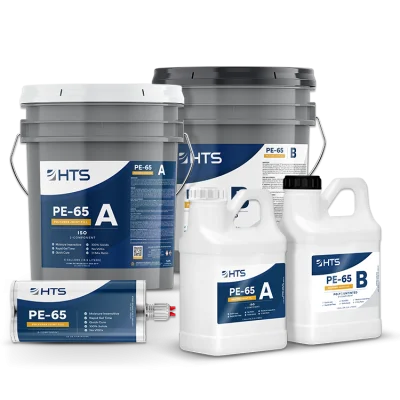
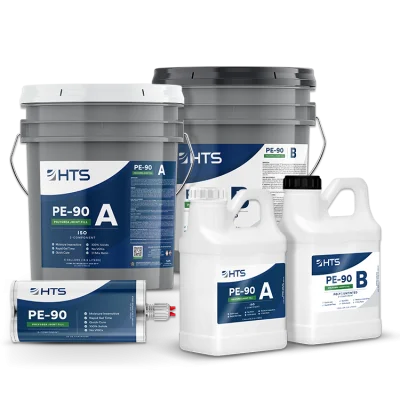
Polyurea is the material of choice for professional concrete joint filler applications because of its rapid cure time, moisture insensitivity, and ability to perform across a wide temperature range — PE-90 cures from -20°F to 130°F, PE-65 and PE-85 from 30°F to 130°F. Unlike epoxy joint fillers that are rigid and brittle, or silicone-based products that offer no edge protection, polyurea elastic grout and poly urea grout products strike the right balance between flexibility and load-bearing strength. HTS polyurea joint fillers are 100% solids with a 1:1 mix ratio, meet USDA and FDA requirements, and are VOC compliant.
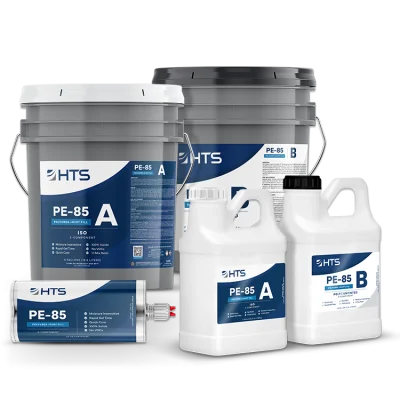
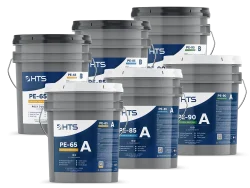
HTS Chemical manufactures polyurea joint fillers with Shore A hardness ratings from 65 to 93 in the semi-rigid range, plus a Shore A 50 flexible joint sealant (PE-45) for expansion joints and applications with significant movement. PE-65 is the go-to product for light to moderate traffic. PE-85 is the most popular choice for industrial warehouse floors with forklift traffic. PE-90 provides the highest shore hardness for maximum joint edge protection under the heaviest loads.
Selecting the right polyurea joint filler comes down to matching the Shore A hardness to the demands of the floor. Shore A is a measure of material hardness on a scale from 0 (very soft) to 100 (very hard) — higher ratings mean more rigid joint edge protection, lower ratings provide more flexibility.
PE-85 (Shore A 85-87) is the most widely used polyurea joint filler in the industry. Technical Bulletin TB-5 notes that Shore A 85 has become the standard for typical warehouse and industrial environments with forklift and pallet jack traffic. PE-90 (Shore A 90-93) provides the highest hardness for extreme loading conditions and is the only HTS joint filler rated to cure at -20°F, making it the preferred choice for freezer and cold-storage applications. PE-65 (Shore A 65-67) is designed for lighter traffic environments like retail, schools, and office buildings where pedestrian traffic or soft-wheeled carts are the primary concern.
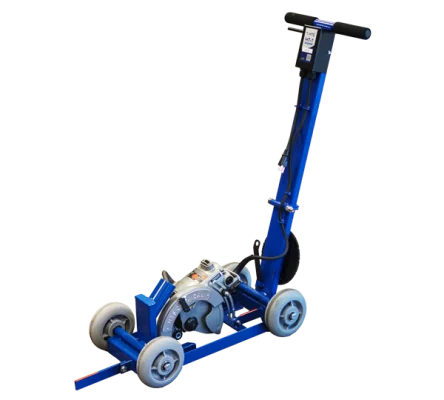
All HTS polyurea joint fillers are traffic-ready in 60-90 minutes depending on the product and ambient temperature. Technical Bulletin TB-5 recommends a minimum fill depth of one inch for semi-rigid fillers, with full-depth fills preferred in construction joints. PE-65, PE-85, and PE-90 bond directly to clean, properly prepared concrete without a separate primer — joint sidewalls should be profiled with a cleanout saw and vacuumed before filling per Technical Bulletin TB-6.
Polyurea joint fillers are the industry standard for filling joints in concrete across warehousing, distribution, manufacturing, food processing, pharmaceutical, and retail environments. Any facility with concrete floors that sees wheeled traffic benefits from properly filled and protected control joints. Forklifts, pallet jacks, carts with hard wheels, and AGVs all place concentrated loads on joint edges that will deteriorate without protection.
In food processing and pharmaceutical facilities, filled joints also serve a sanitary purpose. Open joints collect bacteria, moisture, and organic material that create hygiene risks. HTS polyurea joint fillers meet USDA and FDA requirements for use in food-contact environments. In cold storage and freezer facilities, the moisture insensitivity and low-temperature cure capabilities of polyurea make it the only practical joint filler option. Airports, parking structures, and bridge decks also rely on polyurea joint fillers for their rapid cure and long-term durability under constant traffic.
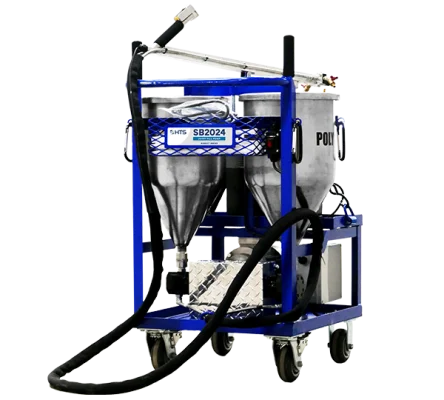
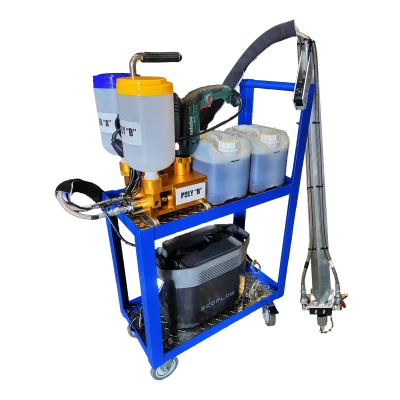
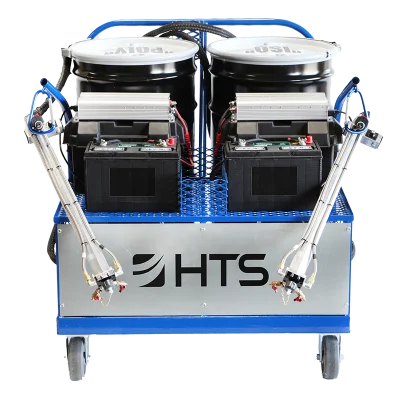
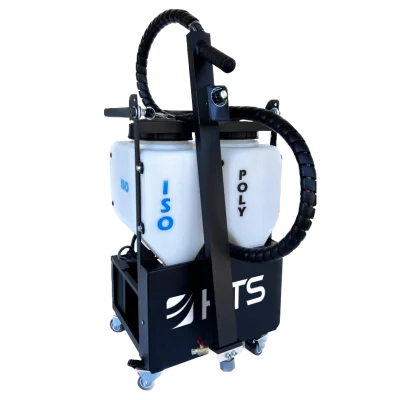
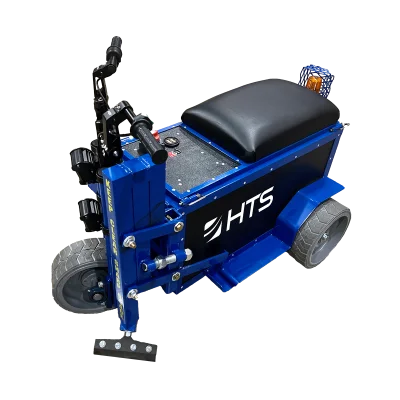
Equipment to do the job right
The perfect complement to our products
Let’s get to work.
Speak to an HTS sales rep in your area to discuss your project. We look forward to helping you be successful.
Find a Sales Rep